
Be yourself; Everyone else is already taken.
— Oscar Wilde.
This is the first post on my new blog. I’m just getting this new blog going, so stay tuned for more. Subscribe below to get notified when I post new updates.
Be yourself; Everyone else is already taken.
— Oscar Wilde.
This is the first post on my new blog. I’m just getting this new blog going, so stay tuned for more. Subscribe below to get notified when I post new updates.
Biohacking is a way of making an incremental change for the improvement in the health and well-being of life. Human Biohacking in the easiest term is to modify our human body to reach the utmost limit of human biology using medicines, human body modification, and implants. There are 3 different types of biohacking. Nutrigenomics, DIY biology and Grinder are its types. Nutrigenomics is based on how the food that a consumer consumes affects his/her genes. DIY biology is a way of helping non-expert or novice people conduct experiments and tests with themselves by people with high skills, education, and experience in the scientific field. DIY biohacking can cause serious issues if not done properly and not well trained. The grinder is a biohacking subculture or group of people whose main motive is to combine the human body with gadgets, use implants and chemical injections and anything in between to make the devices to work as they want to. In basic terms, grinders try to become cyborgs (half human and half robot or as to say with artificial parts: metals electrical, mechanical or robotic).
The purpose of bio-hacking is to push the limit of human potential and reduce the chance of being affected by the diseases, help in achieving physical, mental or emotional change such as losing weight, depression symptoms and optimizing body functions such as blood pressure or gut bacteria. Another purpose is to add functionality in human day to day life and change the future of how we deal with our bodies. It’s an important new science which needs to be studied and have close attention from the public.
For example, in 2015 a man injected a chemical compound named chlorin e6, which gave him temporary night vision. It worked because of chlorin e6 alters molecules in eyes called photosensitizers. It makes the cells in the eyes more open to the light.
In 1948 the term ‘cybernetics’ (from the Greek kybernetes or “steersman”), was coined by American mathematician Norbert Wiener (1894-1964) He coined it while investigating targeting-system feedbacks and information theory. In 1960 a year before the first man that ever went to space, inventor, and scientist Manfred Clynes was in the verge of deciding what is the best way to make human life survive in the outer space and decided that drugs and mechanical enhancements(cyborg) are the way to make life exist in extraterrestrial environments. They had ideas of cyborgs or cybernetic organisms. With Nathan Kline, Manfred Clynes they together supplied the term cyborg.
Over half a century later, some biohackers like Lepht Anonym, Kevin Warwick have pushed boundaries for DIY biology and grinder. Warwick started to implant RFID (Radio-Frequency Identification) chips so that he can use them to unlock doors. Besides implanting RFID chips, he has also implanted magnets and sensors in his arm that manipulate a robotic hand and can share sensory experiences.
Meanwhile, in the 2010s more biohacking community has been formed which enables people with keen interest and hobbyists or students to perform different biohacking research with the help of mentors, researchers, and professionals at community biohacking spaces. By 2013, the community had expanded to almost 40 science groups where most of them were in the USA. Well-known organizations like Genspace, New York City’s community bio lab, conduct community research in the bio labs. Also, organizations like iGEM(International Genetically Engineered Machine) are educating people of all ages in genetics and biology.
Recently biohacking has taken a leap in the industry with companies like Dangerous Things (https://dangerousthings.com) which has built a norm around the community as a replacement of different products in our daily life. They have products like RFID and NFC implants that can add different functionality in human biology mainly as a replacement of credit/debit cards travel cards, key passes and much more. Others such as MyDNAPedia (https://www.in.mydnapedia.com/) are on the rise as well. Not only that but blood test implants, which measures lactate, glucose, and ATP are being used too. This implant uses 5 sensors with different layers of enzymes that monitors the data. More implants like North Sense (directs where the magnetic north side is), Eyeborg Project (a prosthetic camera build as an eye) are also being developed.
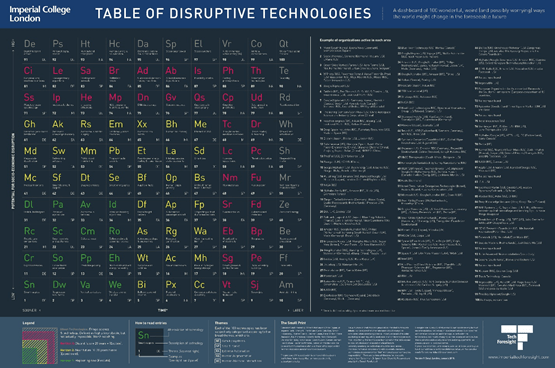
According to the Tech Foresight published by Imperial College London in 2018, human bio-hacking is in the horizon 2 i.e. near future which can reportedly take 10-20 years. This is still being experimented at different organizations and labs such as BioTeq(UK) Grindhouse Wetwear (US), Dangerous Things (US), The EyeBorg Project and The Cyborg Foundation. It means that there many and ongoing experiments that can idealize this technology.
Emerging Technologies are innovative yet not fully developed forms of technology. They can also be continuity of development of existing technologies. It refers to technologies that are still developing and are to be expected within a decade or so. Emerging technologies can be a huge economic risk while implementing but if successful provides a great advantage to the community as well as the business that develops one. Emerging technologies are developed mainly by researches that are either theoretical or practical/commercial. This type of technology generally generates new opportunities for people.
However, disruptive technologies are innovative technologies that supersede the old process, method or habit of using a product or technology and replaces with superior distinctive technology. It usually alters the way consumers, existing businesses and industries operate. Disruptive technologies generally form a new industry and companies that generally fail to account for the effects of this type of technology are profound to lose market shares and indulge them into failing to tackle those issues. Biohacking is one of the disruptive technologies that can replace insulins machines, prosthetics, need to carry passes to travel, credit/debit cards and much more.
Biohacking that generally lies in Nutrigenomics and basic DIY biohacking has little to no issues on the society, whereas grinder community can lead to different views from the society that can eventually be tied up to people’s expectation and results. Elaborating, people who are interested in DIY biohacking and Grinder community generally has enough resources online and can contact different professionals and experts to evaluate and come up with different solutions for their needs to biohack or learn about biohacking themselves. But homebrew biohacking has different consequences that can lead to serious health injuries and even death during the test or biohacking themselves. This community must put a valid test with the experts and find better solutions for safe biohacking with no issues. With companies like Dangerous Things is on the verge of reaching the goal to build cyborg, the businesses can have a huge impact on idealizing biohacking and saturate the community with keen and interested. Although this business venture seems a bit petrifying (can have health issues) and not that practical at times, these ideas can implement different positive approaches for the future. As the core motive of biohacking is to improve human functioning and health, it can help in finding immediate solutions for diseases, an increase in productivity and much more.
Movies like inspector gadget, Robocop and mainly Ironman has set a standard for this community as well as it has set some references for researchers and hobbyists as it indulges them to have a certain expectation and the work to put up to its sleeves to make it work.
Biohacking has reached to a point that it is readily available to all the people to try, explore and understand its merits. Not only can it be used only for turning people into cyborgs but also can be used as a development of self-character, maintaining diets and changing attributes of human life to live an efficient life. Biohacking can also become a business venture. Entrepreneurs are likely to invest in this sector as it can help in the medical industry too. Biohacking can also be used to 3D Printing Body Parts by (genetically modifying elements of bacteria that lead to the formation of light-sensitive bacteria. It offers an endless opportunity in fixing several body parts, including kidneys. This also opens the doors to the unexplored areas of skin grafting and the possible uses of artificial skin.
Moreover, multiple hackers have trialed what part of their DNA is linked to the DNA of the extinct species of human. These results and experiments can help scientists who study evolution in understanding the genetic changes over the years. Some biohackers are committed to the cause of the community that is experimenting genetically to modify microbes in a way that can produce the required amount of insulin that patients need who are suffering from diabetes.
Despite all the positives it has few demerits as well. Biohacking can cause some serious issues in the security sector as implants such as NFC chips can be misused in the biohacking community Biohackers can also use RFID chips to hack into servers, get information about the organization or company they can release patents and vital information about the company. Those implants are used as an alternative to credit/debit cards, unlocking doors and smartphones. But outdated patches and software, older version of security software and devices can make hackers hack devices easily and without hassle. Moreover, those devices can be altered to get into hospital web services that record data and medical reports. If hackers get hands into those data, serious destructive devices can be made from devices that are used for saving lives. Hackers can change details of patients and also can play around with the compositions and requirement of medicines for patients that can be life-threatening.
In addition to security issues, people or groups of people who are in this field can technically harm themselves by biohacking. Some biohacking such as taking supplements or making changes with the diet or exercise may be safe but using implants may not be safe until and unless overseen by a professional. DIY and grinder have the most risks as they are not performed in a controlled environment such as laboratory, research facilities or medical offices. Also, biohacking at home that relates to modifying the body can cause life-threatening issues, amputations, and even death.
Despite all the issues, access to web servers and organizations can be fixed by creating secure algorithms such as cryptography or encryption, two-factor authentication, and others. It is still in its experimental phase so there are bound to have issues regarding the health and well-being of people but most of the experiments are reversible if anything goes wrong.
This is an example post, originally published as part of Blogging University. Enroll in one of our ten programs, and start your blog right.
You’re going to publish a post today. Don’t worry about how your blog looks. Don’t worry if you haven’t given it a name yet, or you’re feeling overwhelmed. Just click the “New Post” button, and tell us why you’re here.
Why do this?
The post can be short or long, a personal intro to your life or a bloggy mission statement, a manifesto for the future or a simple outline of your the types of things you hope to publish.
To help you get started, here are a few questions:
You’re not locked into any of this; one of the wonderful things about blogs is how they constantly evolve as we learn, grow, and interact with one another — but it’s good to know where and why you started, and articulating your goals may just give you a few other post ideas.
Can’t think how to get started? Just write the first thing that pops into your head. Anne Lamott, author of a book on writing we love, says that you need to give yourself permission to write a “crappy first draft”. Anne makes a great point — just start writing, and worry about editing it later.
When you’re ready to publish, give your post three to five tags that describe your blog’s focus — writing, photography, fiction, parenting, food, cars, movies, sports, whatever. These tags will help others who care about your topics find you in the Reader. Make sure one of the tags is “zerotohero,” so other new bloggers can find you, too.

 AYUXX GAMES